28 January 2014

Join us

     A few lots along the Caribbean have been surveyed and are offered for sale.


     The photo below is of the preliminary survey - preliminary only because when we cleared the 'calle' (the small roadway between the two sets of lots) we found it to be much too wide and so we'll be adjusting the survey accordingly.
     This new phase of the project at False Bluff is called Las Tortugas, an appropriate title to give to a part of Nicaragua's coast where as many as five of the world's seven recognized species of turtles come to hatch...yes, sea turtles hatch at False Bluff.
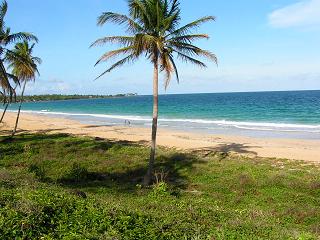
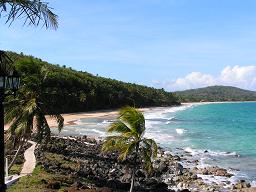
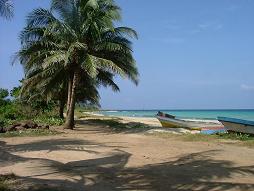
     The section of the Caribbean Coast where we're located is pristine and teeming with wildlife; and although it seems remote, it's only a few miles by water from the small and bustling port town of Bluefields. Unless you're actually in town, on foot or in a taxi, you travel by water  - and that gets to be your norm really quickly.
     There's a tropical-forest-edged lagoon to our back and the sea to our front with fishing, both salt and fresh water, and swimming, and hiking, and gardening, and bird-watching, and reading...a choice of activities limited mostly by your imagination.
     Or you can choose to do absolutely nothing at all, which is a favorite pastime of mine...


     Peter Imhof at Caribbean Dream Realty has the details. You can reach him at http://www.caribbean-dream-realty.com/  
     At False Bluff we agree with Peter's philosophy about the land and extend that philosophy to the land in our stewardship - what he says about the fragility of the two Corn Islands applies equally to all of Nicaragua's Caribbean Coast; and so some covenants and restrictions will apply to lot use and building. 
     Peter's business philosophy and our long acquaintance are the reasons we've chosen him to act as our agent.

   helpful,
   reliable,
   trustworthy
   
About Nicaragua
- General Infos
- Maps
About us
Investors Guide- Associations
- Residence
- Title insurance
- Purchasing property
- Purchasing process
Contact us
   
  helps you to invest in Nicaragua's Caribbean Coast 

  Corn Islands
      General Infos
      Maps
  For Sale
      Sites/Lots
      Houses
      Condominiums
      Commercials
  For Rent
      Houses
      Commercials 

  Atlantic Coast
      Bluefields
      Pearl Lagoon

  Mainland
      Rivas
      Chichigalpa


     Philosophy
    The Corn Islands are a fragile biosphere and need a sustainable development, in which
    economical, environmental and social aspects participate and improve synchronously. The
    real estate has a high co-responsibility.
    Integrity, honesty and knowledge of the local characteristics are the trademarks of my
    business practice. Very important is time, attention and expertise for my clients, never to
    pressure, but there to help you make the good decision.
                                             
  
                                                                   Copyright 2005 - 2013 by Caribbean Dream Realty

     Our blog tells the ongoing story of False Bluff; and there's more information about both False Bluff and Bluefields at https://www.facebook.com/pages/False-Bluff/142899219245180.


23 January 2014

That beautiful palm tree, part I

     Coconuts are important in Bluefields as well as in other parts of Nicaragua: they're used in all sorts of ways for human consumption as well as for animal food. A Bluefields resident tells me coconuts are getting harder and harder to come by. Not many coconut trees are grown inland in either of the country's autonomous regions and most of the coconuts used in these places come from trees that grow along the Caribbean coast.   Much of what gets harvested along the RAAS coast goes to RAAN which has caused the price of coconuts in Bluefields to increase.
     Since there are so few people who live full-time along any part of Nicaragua's Caribbean coast, theft of coconuts is an ongoing problem. After I opened the creek from the lagoon to the beach, we had some 'thiefs' who used the creek because it provided easy access to coconuts from trees growing along the coast. Harvesting coconuts takes awhile whether you're stealing them or not; and, boats were left near our dock for days. Bags of husked coconuts were then hauled back to the boats and taken to wherever stolen coconuts go. We began to take pictures of this sort of activity in a very obvious way, asking people to smile for the camera, although the two in the photo below wouldn't turn around and smile. It's been a year or so since the creek has brought us anymore coconut 'thiefs.'  


     But boats still travel up the Caribbean along the coast, mostly entering the sea where Bluefields Bay meets El Bluff. A neighbor recently told me that the coconut trees on one of his places was pretty well stripped clean and the only sign of human activity was a trail of prints to and from the Caribbean...and the huge pile of husks.


16 January 2014

And more wind damage

     I'm sorry we lost some coconut trees but was surprised that despite heavy winds the only ones that were downed weren't too healthy to start with.  They either never got a good grip on the ground or they were hacked with machetes over and over for years.  Many young coconut trees at False Bluff were planted by nature:  a 'nut hit the ground and just took root.  We've planted more than 400 new trees as we've cleared land, and each new sprouted coconut goes into a hole, dug just for it.


     And I'm not too fond of a green net over the roof of the house, but I like it more than I did when it was first installed. If it keeps the roof in place I can like a green net a whole lot.


     What I really miss is the little palapa.  The first structure, it was built as a field kitchen and continued to be used as a kitchen until the house was built.


     Once we had a real kitchen, the palapa was retrofitted and really became a palapa:  the plastic walls were removed and benches were added. It became a peaceful shady shady spot right beside the sea.


      A part of our landscape for years....and then not.


08 January 2014

Wind damage

     High winds lifted some of the thatching on the house roof.  We didn't lose anything off the roof - the winds just moved some things around.  So, we did what many people do to thatch roofs along the Caribbean:  we straightened out the thatch and put a net on the roof!
     The used nets are purchased at El Bluff and are huge, and so need to be retrofitted before installation.  A single net is cut into however many pieces are necessary to do the job and the edges are then sewn together.


     Installation is done by dragging the entire, newly pieced together net onto the roof where it's spread into place and tied down along strategic points.  (In the lower left corner of this picture you can see the remains of another coconut tree we lost to the wind, like the one in the previous post.)


     And at the end of a day of work, a nap's a good thing - anywhere you can get it.


     The roof is now protected against winds with a bright green net.


29 December 2013

Stormy winds

     We had lots of rain and wind at False Bluff during the 2013 rainy season.  Frequent storms blew in quickly and just as quickly blew out again.


     And, inevitably, we lost some things to the winds.  Some of our old coconut trees were the first things to go...


23 December 2013

Richmond? False Bluff?

     I split my time between projects in both of these locations.  One in Virginia, USA; one in RAAS, Nicaragua. There's a wonderful difference between the two that makes for a pretty eventful life.      
     Other Richmonders have visited me, their trips separated by a couple of years.  One couple, in my east-end-of-Richmond neighborhood, has bought property on Bluefields Bay and will move to Bluefields (the small city eight miles by water from False Bluff) full time within the next twelve months to finish building.
     The other couple's maneuvering to do the same.
     So far visitors to my part of Nicaragua have become that attached that quickly and it's easy to understand why.  It goes back in part to that old real estate adage:  location, location, location!


20 December 2013

Passion fruit

     Growing somewhere most everywhere in the world, one of these vines produces a fruit for nearly every taste.  Each of the many varieties has a flower that is similar in general shape but differs in color and size, as do the fruits of the vines.  Next time you check the ingredients of a fruit drink and see 'passion fruit' you might wonder just which passion fruit's juice was added.
     At False Bluff we have two varieties. The 'granadilla' (not the 'grenadilla' which is a small tree known for its dark wood) is shown here as flower and not-yet-ripe fruit. The fruit is bright yellow when it's ripe and about the size of a tennis ball:


     And the one known along the Caribbean as 'calala' with a purplish flower and a fruit that's much larger than the granadilla, oblong rather than round, and eaten while it's still a lovely green color, seeds and all:


17 December 2013

How to prepare a coconut for drinking

     Palm trees are a major feature at False Bluff so they're in several posts (and will be in more to come).   
     Here a couple of visitors on the beach enjoy coconuts right off the tree.


     And in this short video Julio Castillo demonstrates just how to prep a coconut for instant consumption.  (More about Julio on False Bluff's Facebook page.) 


11 December 2013

False Bluff on the Caribbean

     When La Costena flies to Big Corn Island, a long lovely stretch of the Caribbean coast is left below and behind.  Here's a picture taken from a flight to the island that shows Bluefields, El Bluff, Smokey Lane Lagoon, miles of white sandy beach...and False Bluff.


06 December 2013

Don't forget Facebook...

     Two posts today.  We invite friends to the False Bluff Facebook page where there's similar information about Bluefields, RAAS (Region Autonoma del Atlantico Sur), and the surrounding area.


05 December 2013

Across Nicaragua

     Lots of people go to Nicaragua, and lots of those people fly on to Big Corn Island.  Few of those people end up in Bluefields - a shame for them and a shame for Bluefields.  
     La Costena Airline, a member of the Taca Group, is based out of Managua's Sandino airport and flies to ten domestic destinations.   Nicaragua's about the size of the state of New York and to fly from Managua to Bluefields takes less than an hour.
     La Costena's planes cruise at an altitude far less than 37,000 feet, so you get a good view of the countryside as you cross over it.


      Bluefields, located in RAAS, the southern autonomous region, is Nicaragua's largest port city, and is on a bay within sight of the Caribbean. You can see the bay in the left of the photo below.


        The runway stops just short of the bay...


     Easy to catch a taxi at the airport for the short ride to town where there are a lot of hotels.  I know only the Caribbean Dream Hotel in the heart of 'downtown' Bluefields:  clean, comfortable, with a restaurant on site, and close to most everything.


28 November 2013

We have 'Saccharum officinarum'

     ...better known as sugarcane.  It grows in small stands all over False Bluff.  It's great as a snack and we also have a small press for extracting the juice.
     As a snack, a piece of the cane is cut, peeled, and cut again into small bite-sized chunks that are chewed (the fibrous remains end up in the garbage).  I'd never had fresh sugarcane before growing and harvesting it at False Bluff and so was unprepared for what a treat it is:  nothing like pure sugar at the end of a hot day.
     We have a simple but effective press to extract the juice which is mostly used for cooking.  A simple treat that doesn't involve any cooking, other than what nature does, is made from grated coconut that's mixed with the juice and then dried in the sun.  Preserving this 'candy' is never an issue. The press is a two person operation.

  One holds the cut 'cane under the pressing 'lever'...

...while a second person operates the lever.  Works really well.

     And, of course, there's Nicaragua's rum, Flor de Cana, made from sugarcane.  Flor de Cana wins awards all over the world.

22 November 2013

Ready for company

     A room is ready for visitors...a bed, a book and the sound of the sea.


07 November 2013

Frogs...really

     This is the song of frogs, not ducks.  One night a few years ago I taped a chorus of singing ranas.          
     Brown and about three inches long, they aren't as interesting to look at as they are to listen to.  And they only sing at night which is why you won't see anything but darkness - and what may be a lightening bug. 
    Close your eyes and enjoy some Caribbean music...

01 November 2013

More beach treasures

     These tiny shells are so fragile many of them break just washing ashore; but I've tucked away a small handful in a little box.


     And almost as fragile is a different sort of shell I have in a tiny bowl.