

THE BEAUTY AT FALSE BLUFF WITH CAYMAN ROCA ON THE HORIZON
20 November 2016
Thanks mom!
With temperatures dropping in Virginia, it's difficult to think of this without a shiver. But at the end of a hot day, when you're wearing boots you won't take off because you love them so much, Mom and a bucket of water are pretty wonderful.

16 November 2016
False Bluff TTG: more plants we have
Some of the plants that we'll have available for sale at the nursery were already growing at False Bluff include the sea grape and the coconut palm.
We're taking full advantage of the plethora of sea grape seeds by providing a 'shade cloth' tent and simpy throwing the seeds onto bare dirt. As a result we have several hundred sea grape seedlings.
This shows not only the tent with seedlings; but, in the background to the right, some of our hibiscus...including a double white of which I could not get a good close shot.

Each of these baby sea grape plants will go into its own pot before the tent is cleaned out to make way for a new batch of seeds to germinate...and so the cycle continues.

And as long as coconut trees produce coconuts we'll have a never-ending supply of baby coconuut trees.
Neither the sea grape nor the coconut palm have showy flowers but both are beautiful stewards of sandy soil with roots that stretch for great distances.
And, of course, although not available at False Bluff until we planted it there, there is the zoysia grass that thrives right up to the edge of the beach and remains bright emerald green during both the dry and rainy season (and about which I've written so many times before).
We're taking full advantage of the plethora of sea grape seeds by providing a 'shade cloth' tent and simpy throwing the seeds onto bare dirt. As a result we have several hundred sea grape seedlings.
This shows not only the tent with seedlings; but, in the background to the right, some of our hibiscus...including a double white of which I could not get a good close shot.

Each of these baby sea grape plants will go into its own pot before the tent is cleaned out to make way for a new batch of seeds to germinate...and so the cycle continues.

And as long as coconut trees produce coconuts we'll have a never-ending supply of baby coconuut trees.
Neither the sea grape nor the coconut palm have showy flowers but both are beautiful stewards of sandy soil with roots that stretch for great distances.
And, of course, although not available at False Bluff until we planted it there, there is the zoysia grass that thrives right up to the edge of the beach and remains bright emerald green during both the dry and rainy season (and about which I've written so many times before).
12 November 2016
# 15 - our very own transformer
Having power lines in the back yard was too good an opportunity to not take advantage of - not that we had any choice about the installation of the power lines.
People have asked why the lines were installed where they were...along the nearly barren Caribbean coast, often in swampy areas with guy-wires needed just to keep them upright. With the amount of maintenance that's going to be involved, why bother? Hard to see this leaning pole...because it's leaning into a bunch of trees just about in the middle of the photo. And it was too swampy to get much closer.
Well, I suppose we could have gotten closer if we'd wanted to wade thru the swamp but...you can do that when you come to visit and get us a nice close up.

I've been told that the reason for the placement of these power lines (and perhaps this has been driven by funding because I don't know who provided the money) was to make electricity available to communities that have never had it, that might never have it, absent this installation.
False Bluff is not a community so we had to buy a tranformer to get our electricity-as will many other owners along the beach. So far two of us have installed transformers; and at False Bluff we've got most of the house wired too. Momentous times!
Never thought I'd have my own transformer but here's #15 in the back yard on the day...

...it was lifted toward heaven like an offering to the god of power.

People have asked why the lines were installed where they were...along the nearly barren Caribbean coast, often in swampy areas with guy-wires needed just to keep them upright. With the amount of maintenance that's going to be involved, why bother? Hard to see this leaning pole...because it's leaning into a bunch of trees just about in the middle of the photo. And it was too swampy to get much closer.
Well, I suppose we could have gotten closer if we'd wanted to wade thru the swamp but...you can do that when you come to visit and get us a nice close up.
I've been told that the reason for the placement of these power lines (and perhaps this has been driven by funding because I don't know who provided the money) was to make electricity available to communities that have never had it, that might never have it, absent this installation.
False Bluff is not a community so we had to buy a tranformer to get our electricity-as will many other owners along the beach. So far two of us have installed transformers; and at False Bluff we've got most of the house wired too. Momentous times!
Never thought I'd have my own transformer but here's #15 in the back yard on the day...

...it was lifted toward heaven like an offering to the god of power.
09 November 2016
False Bluff TTG: some plants we have
It's been easy to find hibiscus, many of which came from Catarina, a small town on the west side of Nicaragua. The town itself is pretty much a nursery because almost everyone in town grows and sells plants. The place is an incredible experience for a visitor, visually and otherwise - especially a visitor who's also a gardener.
So at Catarina we got some hibiscus we didn't have and we'll collect and offer these and other hibiscus despite the fact that the hibiscus isn't very resistant to salty conditions: it's lovely for planting in leeward spots and thus worthwhile.
But probably because Catarina isn't located on a salty piece of land, it turned out that none of the plants I was looking for were available...getting hold of salt resistant plants is proving to be a bit tricky.
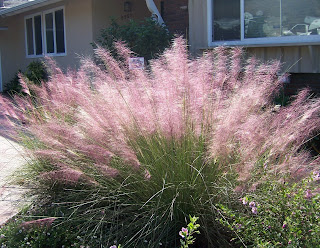
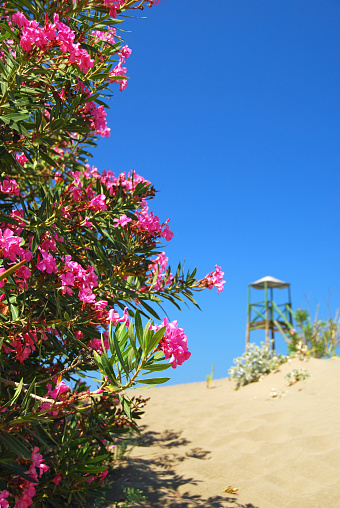
However, we now have the following 'mother' salt resistant plants (these aren't pics from False Bluff TTG since our plants aren't blooming yet, but were instead just pulled from the web):


So at Catarina we got some hibiscus we didn't have and we'll collect and offer these and other hibiscus despite the fact that the hibiscus isn't very resistant to salty conditions: it's lovely for planting in leeward spots and thus worthwhile.
But probably because Catarina isn't located on a salty piece of land, it turned out that none of the plants I was looking for were available...getting hold of salt resistant plants is proving to be a bit tricky.
However, we now have the following 'mother' salt resistant plants (these aren't pics from False Bluff TTG since our plants aren't blooming yet, but were instead just pulled from the web):
- Pink muhly grass, white to follow
- Oleander, two colors so far
- Rosemary
- Lantana, several colors and two different growth habits
04 November 2016
Old neighbors, new neighbors
K and L - formerly neighbors in Virginia and soon to be neighbors at False Bluff - checking out their new "home away from home."

Actually their view will be a bit different from the one above: shown below is part of what they'll see from the house they plan to build, with Cayman Roca just visible on the horizon.
And yes, the sky really is that color.


Actually their view will be a bit different from the one above: shown below is part of what they'll see from the house they plan to build, with Cayman Roca just visible on the horizon.
And yes, the sky really is that color.

31 October 2016
FALSE BLUFF TTG, a plant nursery
When I began the project at False Bluff I had the naive idea that, because of the splendid weather, anything I planted would grow splendidly; and the verdant growth that was already there supported this idea I had.
What I hadn't taken into consideration at all was the salt: salt in the air, salt spray, salt that coats everybody and everything, salt that soaks into the sandy soil.
Turns out there's a limited number of landscaping plants - whether they bloom or not - that can withstand that sort of thing; and so, much of what I planted didn't do well or just plain up and died.
Granted, when I began to plant things away from the beach many of the plants that I wanted to grow at False Bluff ended up thriving, although the 'thriving' depended entirely on the plant's salt-resistance. For instance, the ylang-ylang trees had to be planted hundred feet from the edge of the Caribbean; and hibiscus very nearly that.
However, I learned that once the plants were put in their comfort zones, they did what I thought all the plants I wanted to grow there would do...they thrived. But I wanted plants right near the sea, along the beach, that were as ornamental in their own ways as hibiscus is.
Therefore we're opening a nursery that specializes in plants that will thrive close to the sea despite the salt - plus a collection of hibiscus that will put on their show a little farther away from the beach.
This photo shows one of several rows of plants where our specimen, or mother, plants are lined out. These are the plants that will provide cuttings and divisions to create more plants, plants that will be for sale to people who, like me, want to be able to grow pretty things right near the Caribbean. (Additional space is devoted to the propagation from seeds of such things as sea grape.)
This is only a small part of the nursery...

What I hadn't taken into consideration at all was the salt: salt in the air, salt spray, salt that coats everybody and everything, salt that soaks into the sandy soil.
Turns out there's a limited number of landscaping plants - whether they bloom or not - that can withstand that sort of thing; and so, much of what I planted didn't do well or just plain up and died.
Granted, when I began to plant things away from the beach many of the plants that I wanted to grow at False Bluff ended up thriving, although the 'thriving' depended entirely on the plant's salt-resistance. For instance, the ylang-ylang trees had to be planted hundred feet from the edge of the Caribbean; and hibiscus very nearly that.
However, I learned that once the plants were put in their comfort zones, they did what I thought all the plants I wanted to grow there would do...they thrived. But I wanted plants right near the sea, along the beach, that were as ornamental in their own ways as hibiscus is.
Therefore we're opening a nursery that specializes in plants that will thrive close to the sea despite the salt - plus a collection of hibiscus that will put on their show a little farther away from the beach.
This photo shows one of several rows of plants where our specimen, or mother, plants are lined out. These are the plants that will provide cuttings and divisions to create more plants, plants that will be for sale to people who, like me, want to be able to grow pretty things right near the Caribbean. (Additional space is devoted to the propagation from seeds of such things as sea grape.)
This is only a small part of the nursery...

27 October 2016
A clump of coconut trees
The building lots we have for sale are at the north end of False Bluff and the space where they have been surveyed and are laid out has been pretty well cleared.
Near the first of the lots is a beautiful clump of coconut trees, just as nature planted them years ago. And, of course, at the base of each of these trees our favorite zoysia grass has been planted.

Near the first of the lots is a beautiful clump of coconut trees, just as nature planted them years ago. And, of course, at the base of each of these trees our favorite zoysia grass has been planted.

23 October 2016
Friends arrive in Bluefields....
Long-time friends, one-time neighbors, arrive at Bluefields airport.


18 October 2016
Bats!
Forgive the horrible picture. What you are actually looking at are two bats that are roosting in the farm house. They squeezed themselves in between a wall and a board. Its good to see they are around and hopefully they will stay in the area, not necessarily inside the house. We have talked a lot about building some bat houses to keep the mosquitoes down but we will need to design masonry ones since the termites go after any dead wood. One more task on the list of things to do.

11 October 2016
Choppy Sea
In some of the previous posts you have been able to see what the Caribbean looks like most of the time. Usually around 4am the sea is quite calm and flat. As the day progresses the sea becomes choppier. It's always nice to be able to walk along deserted beach. The day I took these pics the Caribbean was the choppiest I'd seen it in a long time. Still beautiful either way.


04 October 2016
Evening on the Bay
Great view of Bluefield Bay in the evening from one of our favorite places to dine. The Pelican Bay Restaurant is on the end of the point that makes up the Pointeen Neighborhood. Not only does it have great waterside seating but also great food.

27 September 2016
Final Bit of the Canal
Just a couple minutes of video from the end of the boat trip from Bluefields, through the lagoons, and the final bit of canal. At the very end you can see the farm house and a straight walk will take you to the Caribbean beach.
20 September 2016
Spiffing up the Guest Dock
The guest dock looking good with some fresh boards and freshly cut grass. This view from the dock is looking west into the jungle towards the lagoon. After traveling along our shady canal you know you have reached the farm when you are back in the sunshine.


13 September 2016
Connected to the Country
Bluefields is the capitol of the southern state R.A.A.S. Its a great town and we fly into it so we can boat out to the farm at False Bluff. During most of the years we have been staying in town it has not been connected to the rest of the country by a road. Everything and everyone would would either fly in or boat in from the port at Rama. Construction on the road started a couple years ago and has reached Bluefields. Hopefully this will only bring positive changes to the town and the surrounding jungle.

16 August 2016
The changing scenery, 2
Photos in a recent post showed how the fast-growing palm trees are changing the scenery we see when we sit upstairs at the house. Along with these highly visible changes in the front yard - between the house and the Caribbean - are the equally highly visible changes along the walkway.
When a boat comes up our canal, docks, and offloads its passengers...they either take the public pathway we've provided that goes directly to the beach....
Or, if they're coming to visit us, they walk along the non-public pathway that's lined on both sides with palm trees that we've planted...and on one side, the house side, with a very low visibility 'fence' that serves as a guide rather than as a prohibition.
This series of photos begin with the two immediately below, one of which is the view from upstairs, looking toward the sea, before we put up the fence...and the other of which was taken at ground level - also before the fence.


09 August 2016
Posting a post
Don't know that I've done this before - posted a post from somebody else, but I've included the link here to a story entitled "Nicaraguan Cities and Their American Counterparts" (and my thanks goes to HD for sending this to me...see July 11, 2016 about HD).
But Nicaragua's east coast is rarely mentioned, ever, by people writing about Nicaragua. And when people writing about Nicaragua do mention the east coast what's mentioned are the two Corn Islands which really aren't part of the coast since they sit forty miles off shore smack in the Caribbean Sea.
So sometimes it seems that Nicaragua's right side (and there's even a site devoted to the right side - http://rightsideguide.com/) doesn't exist or isn't on anybody's radar.
In some ways that's good because the right side will manage to keep its 'purity' a while longer - although really and truly and slowly, Nicaragua's right side's being 'discovered.'
But the story's fun and is about various Nicaragua cities and what might be their United States' counterparts. However my real surprise was not so much that Bluefields = New Orleans but that Bluefields is the writer's favorite city in Nicaragua! I'm on board with that for sure.
https://thenicadventure.com/2016/06/08/nicaraguan-cities-and-their-american-counterparts/
But Nicaragua's east coast is rarely mentioned, ever, by people writing about Nicaragua. And when people writing about Nicaragua do mention the east coast what's mentioned are the two Corn Islands which really aren't part of the coast since they sit forty miles off shore smack in the Caribbean Sea.
So sometimes it seems that Nicaragua's right side (and there's even a site devoted to the right side - http://rightsideguide.com/) doesn't exist or isn't on anybody's radar.
In some ways that's good because the right side will manage to keep its 'purity' a while longer - although really and truly and slowly, Nicaragua's right side's being 'discovered.'
But the story's fun and is about various Nicaragua cities and what might be their United States' counterparts. However my real surprise was not so much that Bluefields = New Orleans but that Bluefields is the writer's favorite city in Nicaragua! I'm on board with that for sure.
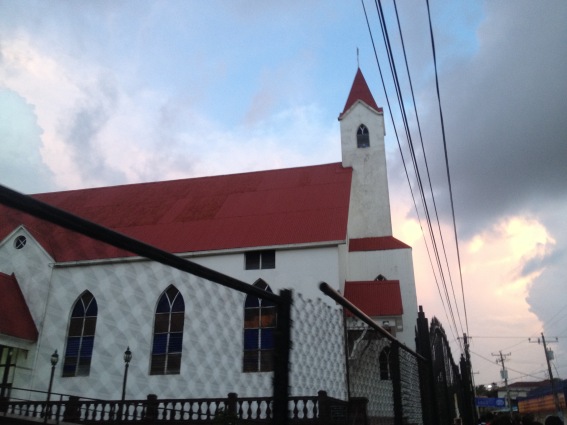
(Bluefields' Moravian Church)
03 August 2016
Win some, lose some
...and Richmond's losing this time.
Here they are, there they go - part of the wedding party at the cathedral in Bluefields a couple of years ago:


No more snow to shovel and a lot of fish waiting right outside the front door!
Vaya con dios, bienvenido (and I'll see you in a week or so)!
Vaya con dios, bienvenido (and I'll see you in a week or so)!
29 July 2016
The changing scenery
My last post touted the benefits of pruning all the palm trees we've planted in order to make the trees grow faster. Here are a few shots, all from pretty much the same perspective, that show how the tree growth is changing the view from upstairs in the house. (Note that at least one of these shots was taken before there was a house that had an upstairs...)
The first thing we did was clear all the breeze-stifling low stuff...small knee- or head-high shrubs that grew so prolifically and tightly that the breeze off the Caribbean literally couldn't get through. And we sure couldn't walk through the stuff without long pants and boots. We left any palm tree that was already growing and all the sea grapes. Cayman Roca is visible in the distance in the photo below, 2.5 miles offshore.

Clearing the undergrowth made space for an impromptu volley ball game at the end of a day.

But the "volleyball court" got filled up pretty quickly as the trees were planted and began to grow. It's easy to orient yourself by checking out the adult palm trees closer to the sea.

And now, of course, this is the view from upstairs with trees and shade and lots of my favorite zoysia grass covering the ground like an emerald green carpet. Sure, we can't see Cayman Roca from upstairs anymore....but a few more years of growth and pruning will take care of that and give us back the view of that tiny island.

The first thing we did was clear all the breeze-stifling low stuff...small knee- or head-high shrubs that grew so prolifically and tightly that the breeze off the Caribbean literally couldn't get through. And we sure couldn't walk through the stuff without long pants and boots. We left any palm tree that was already growing and all the sea grapes. Cayman Roca is visible in the distance in the photo below, 2.5 miles offshore.

Clearing the undergrowth made space for an impromptu volley ball game at the end of a day.

But the "volleyball court" got filled up pretty quickly as the trees were planted and began to grow. It's easy to orient yourself by checking out the adult palm trees closer to the sea.
And now, of course, this is the view from upstairs with trees and shade and lots of my favorite zoysia grass covering the ground like an emerald green carpet. Sure, we can't see Cayman Roca from upstairs anymore....but a few more years of growth and pruning will take care of that and give us back the view of that tiny island.

21 July 2016
Pruning the palm trees
I've taken some crap about my habit of pruning the palm trees we've planted at False Bluff but recently I've had some people who previously questioned the habit ask for demonstrations at their own farms to teach their staff how and why.
It usually takes only a single swipe with a machete per frond (a frond is what passes for a branch on a palm tree but is essentially just a big leaf); and we have a lot of palm trees - literally hundreds - that are newly planted and young enough to have fronds still low enough to prune.
So the job to prune and then clean up is really time consuming but it's worthwhile for the aesthetics alone if nothing else. Pruning gets rid of the broken or yellowing older fronds and of the fronds that block the view of the sea.
And often I sacrifice even healthy fronds. This is especially true in the case of palm fronds that overhang the walkways, our pathways that are now really well defined by virtue of being lined with palm trees...or in the case of palm frond that might smack you in the face no matter where you walk.
I don't care if it's healthy and green: gone!
But the most important reason I've found for pruning the trees is that the pruning at False Bluff has proven to make the trees grow faster - noticeably faster.
Since coconut trees are the ultimate single leader tree, when they're pruned there's only one way for the tree to grow and that's up. Kind of hard to miss the effects of pruning after a few years.


It usually takes only a single swipe with a machete per frond (a frond is what passes for a branch on a palm tree but is essentially just a big leaf); and we have a lot of palm trees - literally hundreds - that are newly planted and young enough to have fronds still low enough to prune.
So the job to prune and then clean up is really time consuming but it's worthwhile for the aesthetics alone if nothing else. Pruning gets rid of the broken or yellowing older fronds and of the fronds that block the view of the sea.
And often I sacrifice even healthy fronds. This is especially true in the case of palm fronds that overhang the walkways, our pathways that are now really well defined by virtue of being lined with palm trees...or in the case of palm frond that might smack you in the face no matter where you walk.
I don't care if it's healthy and green: gone!
But the most important reason I've found for pruning the trees is that the pruning at False Bluff has proven to make the trees grow faster - noticeably faster.
Since coconut trees are the ultimate single leader tree, when they're pruned there's only one way for the tree to grow and that's up. Kind of hard to miss the effects of pruning after a few years.


15 July 2016
Biters
We've had significant damage done to two clumps of sea grapes close to the house...I'm not sure yet just what these things turn into after they've eaten their fill.


...and they've even begun producing some fruit, tho not nearly what they've produced in the past.

Next year we're going to use dishwashing liquid.


The sea grapes have made a remarkable recovery considering the amount of damage they've incurred

...and they've even begun producing some fruit, tho not nearly what they've produced in the past.

Next year we're going to use dishwashing liquid.
Subscribe to:
Posts (Atom)